Is AI the Answer to Hospitality, Travel & Tourism’s Troubles?

Katie King • November 21, 2022

After a challenging few years, travel is back on the agenda for nearly all major destinations worldwide. While this comes as good news for travellers who have been grounded for far too long and for economies that depend on the capital that tourism and hospitality bring, it does put some pressure on businesses in the industry.


According to the World Travel & Tourism Council, before the pandemic Travel & Tourism’s direct and indirect impacts accounted for 1 in 4 of all new jobs created across the world, 10.3% of all jobs (333 million), and 10.3% of global GDP ($9.6 trillion USD). Global lockdowns and travel bans majorly impacted the industry, with the number of jobs falling from 333 million to 271 million. While the industry managed to recover slightly in 2021, 2022 has presented its own set of challenges.


While guests and passengers enthusiastically returned to travel, staff did not. During the peak of travel season, we saw flights cancelled, chaotic airport queues, and baggage piled up due to staff shortages. But the troubles don’t stop at the airport. Hotels, bars, restaurants, and entertainment venues have all faced their own staffing shortages. Competition for talent is fierce and these shortages cause disruption. For businesses still working to recover the capital they lost during the pandemic, this is a particularly difficult hurdle.


These challenges also pose a threat to guests and customers’ overall experience. Some guests may be understanding about understaffing or any resulting hiccups, but their overall expectations have changed. Managing these expectations is a challenge for travel and tourism in normal circumstances. Meeting—or exceeding—these expectations with limited resources adds another layer entirely.


AI is an incredibly powerful tool for helping businesses overcome their hurdles to gain a competitive edge, and organisations around the world seem to agree. In IBM’s Global AI Adoption Index 2022, 35% of companies reported using AI in their business and organisations are 13% more likely to have adopted AI in 2022 than in 2021. An additional 42% of companies reported that they are exploring AI. However, travel was ranked as one of the industries which is adopting the least.


Does that mean AI has nothing to offer hospitality, tourism, and travel? Absolutely not. In fact, quite the opposite. Here are some of AI’s top use cases across tourism, travel, and hospitality that may be exactly what businesses in these industries need to overcome to get ahead:


Chatbots and Virtual Assistants


Chatbots are one of the most popular forms of AI used in Travel and Tourism today, and for good reason. These solutions are easy to adopt yet effective and can be massively helpful for improving customer experience with little to no human intervention. These tools have also improved in recent years thanks to advancements in natural language processing (NLP).


Most airlines, hotel chains, travel agencies, and booking providers employ this technology in their business to help with tasks such as answering questions, providing personalised recommendations, sharing important updates related to the customer’s itinerary, cross selling relevant products (i.e., rental cars and experiences), making reservations, and more. AskSuite is one such tool and is already in use by over 2,000 hotels. Their AI-powered assistant provides an automated service on desktop and mobile websites, social media, and WhatsApp that can answer relevant questions and help guests any time of day. In room, SuitePad’s smart tablet devices engage guests through personalised push notifications, the ability to answer their queries, and booking capabilities.


In addition to creating their own bots, many hoteliers and airlines have partnered up with two of the most well-recognised and most used Virtual Assistants on the market: Alexa, Cortana, and Siri. SONIFI is the largest in-room technology provider in hospitality and is used by top global hotel chains including Hilton, Marriott International, IHG, Hyatt, Wyndham, and Radisson. Their interactive solutions and smart room technology is what powers many of the Alexa and Google devices which guests interact with to control their environment, receive recommendations and make in-room purchases. US-based carrier United Airlines offers an app on Amazon’s Echo that allows travellers to book flights and check in. Before heading off to the airport, passengers transiting through Heathrow can ask their Alexa for an update on their flight status.


With many reliable vendors already in this space, the barrier to entry is low for businesses in these industries looking to integrate these smart assistants into their website, social media, or mobile apps.


Robot Staff


Virtual Assistants aren’t the only ‘bots’ making their way into hotels, airports, bars, and restaurants. Many are introducing physical robots as part of their teams.


Relay Robotics is the top provider in this space, and their robot butlers are already in use by IHG Hotels, Marriott, Hilton, Wyndham, Mandarin Oriental, Millennium Hotels and Resorts, Hyatt, and various independent hotel brands. These automated butlers can deliver room service and other items to guest rooms, assist with housekeeping, and alleviate pressure on restaurant wait staff. Similar robots created by CTRL Robotics are in use at Hotel Sky in the Sandton district of Johannesburg, South Africa. The hotel employs 3 robot concierges named Lexi, Micah and Ariel that can deliver room service, provide travel information, and can drag up to 300kg of luggage from the lobby to guests’ rooms.


These bots are helping handle hospitality’s staffing shortages as well. Cecilia.AI is a robotic bartender that mixes and serves cocktails and uses artificial intelligence to talk to customers, while F&P Robotics’ Barney bartender can mix dozens of cocktails, disinfect itself, and even tell jokes. Italy’s Makr Shakr offers two bartending bots that have been installed on nine Royal Caribbean cruise ships. Nala Robotics has developed three fully automated chef robots, capable of making hundreds of different dishes from various cuisines. Their proprietary AI chef hardware and software can adapt and create dishes precisely as customers request them, ensuring their food is customised to their preferences and dietary requirements.


However, this doesn’t always work out, as demonstrated by Japan’s Henn’Na Hotel, which I featured in my first book. The innovative hotel was fully staffed by robots when it opened in 2015, but in 2019, it cut its 243-robot workforce in half after the experience failed to reduce costs or workload for its employees. The failure stemmed from the robot's inability to deliver on basic functions, signalling that the algorithms were not adequately trained. Some robots were retained in the areas where they proved effective, and today humans and robots work hand-in-hand at Henn’Na.


If trained correctly, these bots have major potential to help alleviate some of the pressures on human staff across tourism and hospitality.


Management and Operations


Beyond introducing robot staff, tourism and hospitality businesses can help lighten the load of human staff and maximise their effectiveness. AI can assist with various time-consuming activities such as booking management, marketing, and property management.


Siteminder is the industry’s leading service provider for this, offering tools that enable hospitality businesses to sell across platforms, market their properties, access real-time insights, manage bookings and guests, keep track of payments, and more. Actabl’s ALICE platform helps connects all departments of a hotel to improve their communications and help save time. The full ALICE suite includes tools for front of house, housekeeping, maintenance, service delivery, and guest relations. These tools help to maximise the effectiveness of understaffed teams and provide real-time insights into what’s happening on the property.  


Businesses in the travel industry are turning to AI to streamline their operations and maximise their resources, especially airlines and airports. For example, the Netherlands’ Eindhoven Airport is currently undergoing a pilot programme through 2023 using an AI system called BagsID to streamline the process of moving and tracking passengers’ luggage. Instead of using physical bag tags or RFID, travellers upload a photo of their baggage through a BagsID-connected app, which automatically links the bag to their flight information for easy check in, tracking and pick up. When travel resumed amid the pandemic, Etihad Airways used AI and automation to screen passengers for any visible symptoms of coronavirus to prevent any potential transmission on board their flights. Delta Airlines developed and built a full-scale digital simulation of its operations, which an AI system uses to suggest ways pilots can manoeuvre the aircraft during bad weather to cause the least disruption to passengers onboard. Air France uses AI to analyse flight data to assess fuel efficiency of journeys and reduce emissions, and British Airways uses AI to improve its operational efficiency and maintenance, and to predict on board food uptake.


While technology may not cure tourism and hospitality’s woes overnight, it can help to alleviate some of the pressures on understaffed teams without sacrificing guest experience. The examples here are just a few of the ways in which the travel, tourism, and hospitality industries can benefit from the use of AI, and it is likely that these use cases will expand as more businesses adopt.


If you’d like some more examples from tourism as well as other industries such as manufacturing or retail, check out AI Strategy for Sales and Marketing.
By Katie King July 9, 2026
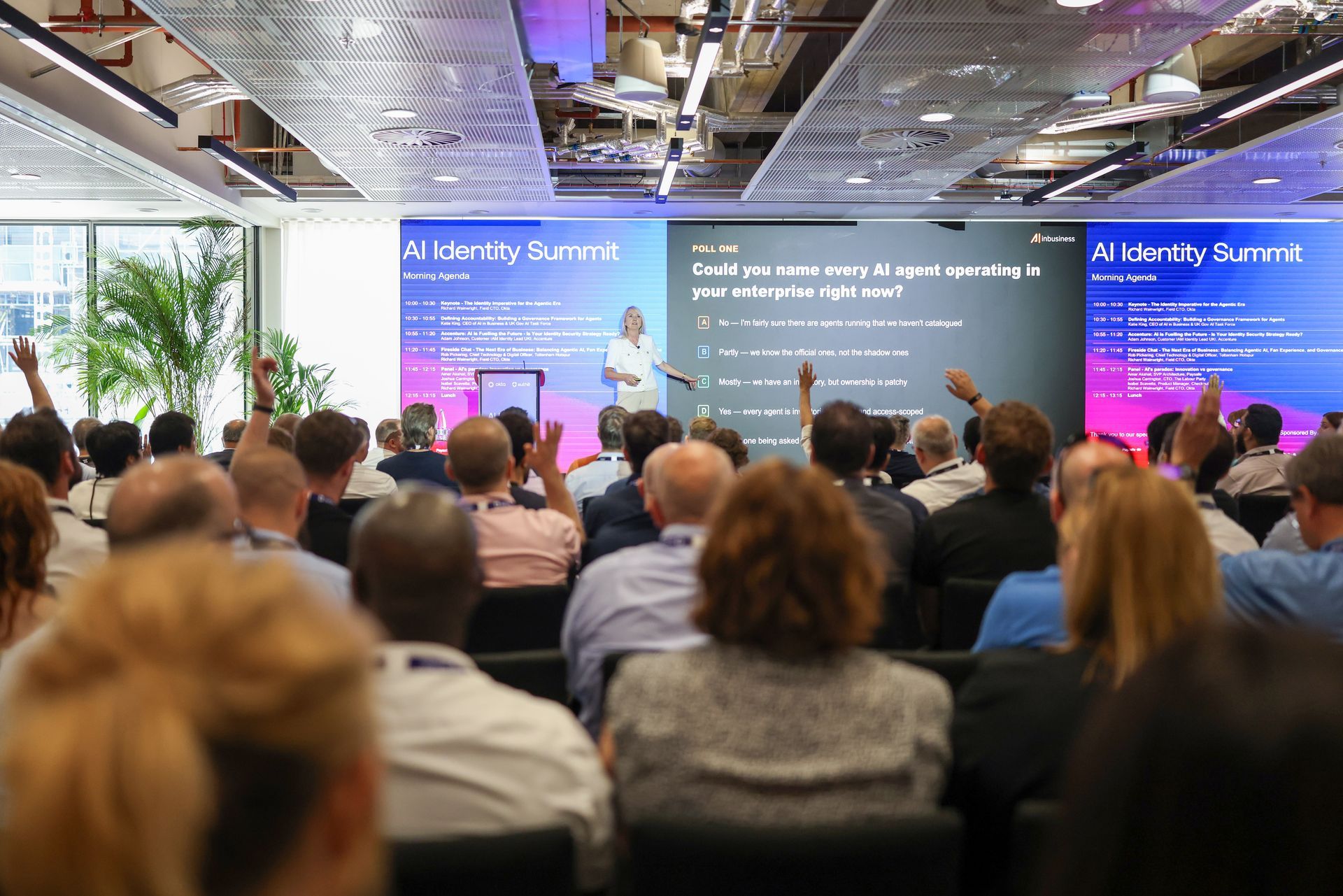
I recently delivered a Keynote at the Okta AI Identity Summit in London, speaking to a room of IT directors, security leaders and identity professionals about a question that is moving very quickly from the theoretical to the urgent: if an AI agent is authorised to act, who is accountable when it does? I want to share here the core of what I discussed, because it applies far beyond that room. The honest picture is that adoption is real, but it is lopsided. Deployment has run ahead of governance. When I ask a security leader whether they can name every agent running in their organisation, and who owns each one, the response is usually a pause. So the question is not whether this is hype. It is genuinely happening, in more places than most organisations can see. The gap is between how fast we are putting agents to work and how slowly we are learning to answer for them. Let me start with the scale of what we are dealing with. For every human identity in the enterprise today, there are now around 109 non-human ones. These are the service accounts, tokens and, increasingly, the AI agents that quietly run our systems. The agents are the fastest-growing part of that picture. Gartner expects the average Fortune 500 organisation to be running over 150,000 of them by 2028, up from fewer than 15 in 2025. But the figure that should stop us in our tracks is this: only 34% of organisations apply the same identity and access controls to their agents as they do to their people. So we have taken on an enormous new workforce, practically overnight, and two-thirds of us are not governing it the way we would govern a human employee. That gap, between what our agents can do and what we can answer for, is the whole problem. It helps to separate two ideas that are often confused. Control answers a technical question: can the agent be seen, scoped and stopped? Accountability answers a human one: when it acts, who answers for it, and can you prove it? Those are not the same thing. A system can be perfectly controlled and still leave nobody answerable. You can have full visibility, least privilege access, guardrails and a working off switch, every technical box ticked, and still be unable to say whose name is on the outcome when something goes wrong. Control is a setting. Accountability is a decision, and only people make it. This matters because the liability is not hypothetical, and the law already points squarely at us. An agent has no legal personhood. You cannot sue it and you cannot sanction it, so a human or the organisation is always the liable party. “The AI did it” is not a defence. The Information Commissioner’s Office has been explicit that you answer for the outcome whether a person or an agent carried it out. Human oversight is not merely good practice either; it is a legal duty, with UK GDPR Article 22 giving people rights over decisions that significantly affect them, and a statutory code now in place on AI and automated decisions. The financial exposure is real money: up to 17.5 million pounds, or 4% of turnover, under UK GDPR, and up to 10% of global turnover under the Competition and Markets Authority’s regime. And if you serve customers in the European Union, the EU AI Act reaches you on top of all of that. The liability already exists. The only question is whether you can meet it. People often tell me they are waiting for the law to arrive before they act. The UK does not have a single AI Act, that is true, but what we have instead is a principles based approach, and your agents are already regulated under it. The ICO governs what your agents do with personal data and is updating its automated decision making guidance right now. The National Cyber Security Centre has set clear security expectations. The Competition and Markets Authority now covers traders deploying agents, and the Digital Regulation Cooperation Forum, which brings the CMA, the Financial Conduct Authority, the ICO and Ofcom together, is mapping where all of this overlaps. There may be no single statute, but five principles bind every one of those regulators: safety, transparency, fairness, accountability and contestability. “We are waiting for the law” is not a strategy. The expectations are already here. They are simply spread across the regulators you already answer to. The cyber security community should take some confidence from where this is heading. In May, the National Cyber Security Centre, together with its Five Eyes partners, published guidance on deploying agentic AI. It says that before you deploy an agent you must decide five things: who owns it, who approves its access, who monitors its behaviour, who reviews incidents, and who can stop it when something goes wrong. Its blunt test is that an agent you cannot understand, monitor or contain is not ready to deploy. Notice the pattern in that list. Ownership. Authorisation. Oversight and audit. An off switch. That is not just one speaker’s framework. It is what the country’s own cyber authority now expects of you. The framework I shared distilled into four questions to ask of every single agent you run. First, who owns it? There should be a named, accountable human behind every agent, because if no one’s name is on the door, no one answers when it walks through yours. Second, what can it do? Scoped, least privilege access to the systems the task needs, and nothing more. Do not hand the agent the master key. Third, how do we know what it did? Every action should be logged, attributable and tamper evident, with traceability built in by design rather than reconstructed after an incident. And fourth, when does it stop? A clean lifecycle, in which the agent is provisioned, rotated, revocable and decommissioned, with an off switch you have actually tested. If you can answer all four for an agent, you can be accountable for it. If you cannot answer even one, that is not an agent you have deployed. It is an agent you have lost track of. The principle of least privilege deserves a moment on its own, because it is doing more work than people realise. Least privilege means giving an identity only the access it needs to do its specific job, and nothing more. Not what might be handy, not what is easiest to set up, and not the same access as the team it sits in. Think of a new cleaner who is given a key to the offices they clean, rather than the master key to the building, the safe and the server room. Even if the master key would be more convenient, you do not hand it over, because the risk if it is lost or misused is enormous. For AI agents the same logic applies, and it matters more, because agents act fast, at scale, and often without a human watching each step. An agent built to summarise support tickets needs read access to the ticket system, and that is all. It does not need to write to your customer database, issue refunds or reach your finance data simply because those things happen to be reachable. If it is over provisioned and it misbehaves, or it is hijacked, the blast radius is everything it could touch, not just what it was meant to touch. This is precisely why it is so concerning that 97% of non human identities carry privileges beyond what they actually use. That standing, excess access is the gap attackers exploit, and every unused permission is a door you have left open. Answering those four questions is how you move from authorised to accountable, because accountability you cannot evidence is not accountability at all; it is hope. Four things make it real. Attribution, so that every agent action traces to one identity and one human owner, never blurred across a shared account. Explainability, because if you cannot explain how an output was reached you should not ship it, since opacity is a liability rather than a feature. Audit and escalation, meaning immutable logs, sampled reviews and a fast, human route to challenge or reverse an agent driven outcome. And decision rights, which define the calls an agent may never make on its own, on the basis that the higher the stakes, the more a human stays in command. The biggest mistake I see is treating all of this as a technology project rather than an accountability one. The Boston Consulting Group has a useful rule of thumb for AI success: roughly 10% is the algorithms, 20% is the technology and data, and 70% is the people and the processes around them. In other words, you can buy the tools, but you cannot buy the culture, the ownership and the judgement that make them safe. The organisations that struggle are the ones that automate first and ask who owns this afterwards. Authorised means an agent is allowed to act. Accountable means you can stand behind what it did. The organisations that will thrive in the agentic era are the ones that treat that distinction as a design principle rather than a clean-up exercise, and that decide, before anything goes live, whose name is on the outcome. The technology is the easy part. The real work, and the real advantage, is human judgement, governance and accountability by default. If you would like to talk about how to put this into practice in your organisation, I would love to hear from you.
By Katie King March 24, 2026
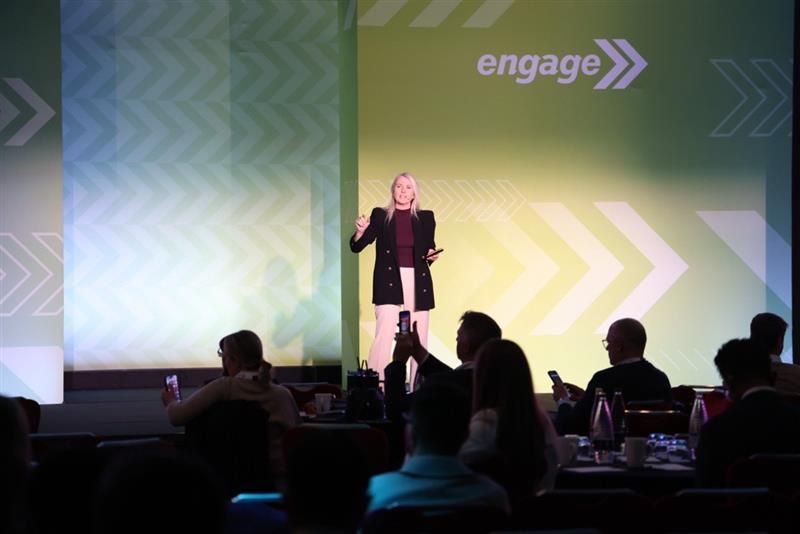
It was an inspiring day at Engage London, hosted by Everest Group — an event that brings together leaders and innovators shaping the future of global business services (GBS), sourcing, and technology. I was honoured to deliver the closing Keynote: "The Connected Advantage with AI: From Ambition to Scaled Value." My session explored how organisations can move beyond AI experimentation and isolated pilots, by connecting strategy, data, people, process and governance. The real competitive advantage comes when AI is not treated as a standalone initiative, but as a business-wide capability that delivers trusted, measurable value at scale. I also spoke about the importance of strong leadership, readiness across people and process, and building the right foundations to scale AI responsibly. I've now written three books on applying AI to business — the most recent published in November 2025 — but in a field moving this fast, staying current is a daily discipline, not a one-time effort. Events like Engage London are genuinely invaluable for that reason, and I came away with a great deal to reflect on. The panel sessions were particularly rich, and several themes stood out: GBS leaders are becoming the custodians of experience. They are increasingly orchestrating work with a bird's-eye view across the total workforce — a significant shift in how the function is understood and valued. The "3 Ss" were a standout insight: self-service, self-adaptation, and self-healing. These three principles offer a compelling framework for thinking about where intelligent automation is heading. GBS has a critical role in governing the AI estate. Trusted data, and people and process readiness, were highlighted as non-negotiables — not optional extras — in any serious AI programme. Resilience remains central to sustained competitive advantage. Amid so much disruption and uncertainty, the organisations that build resilience into their operations will be the ones that endure. One comment that particularly resonated was around intellectual curiosity as a leadership quality. In the AI era, the ability and willingness to keep asking questions is arguably as important as any technical skill. Another powerful observation was about the human dimension of AI adoption: enabling humans to act at the pace of AI, while AI strives to act with the empathy of humans. It's a thought-provoking framing that I'll be carrying into future conversations. There were also excellent insights from Rolls-Royce — a company I had the pleasure of collaborating with for my previous book launch. The reflections shared on cultural change driving sustained behavioural change were memorable: embedding the right mindset into hiring, onboarding and assessment criteria; the shift from awareness to daily habits; and ensuring governance is underpinned by constant dialogue and feedback rather than top-down mandates. Well done to the entire Everest Group team for curating such a thought-provoking event and for the excellent organisation throughout the day. To find out more about Katie's keynote topics and availability, visit the Keynotes page.
By Katie King August 29, 2025
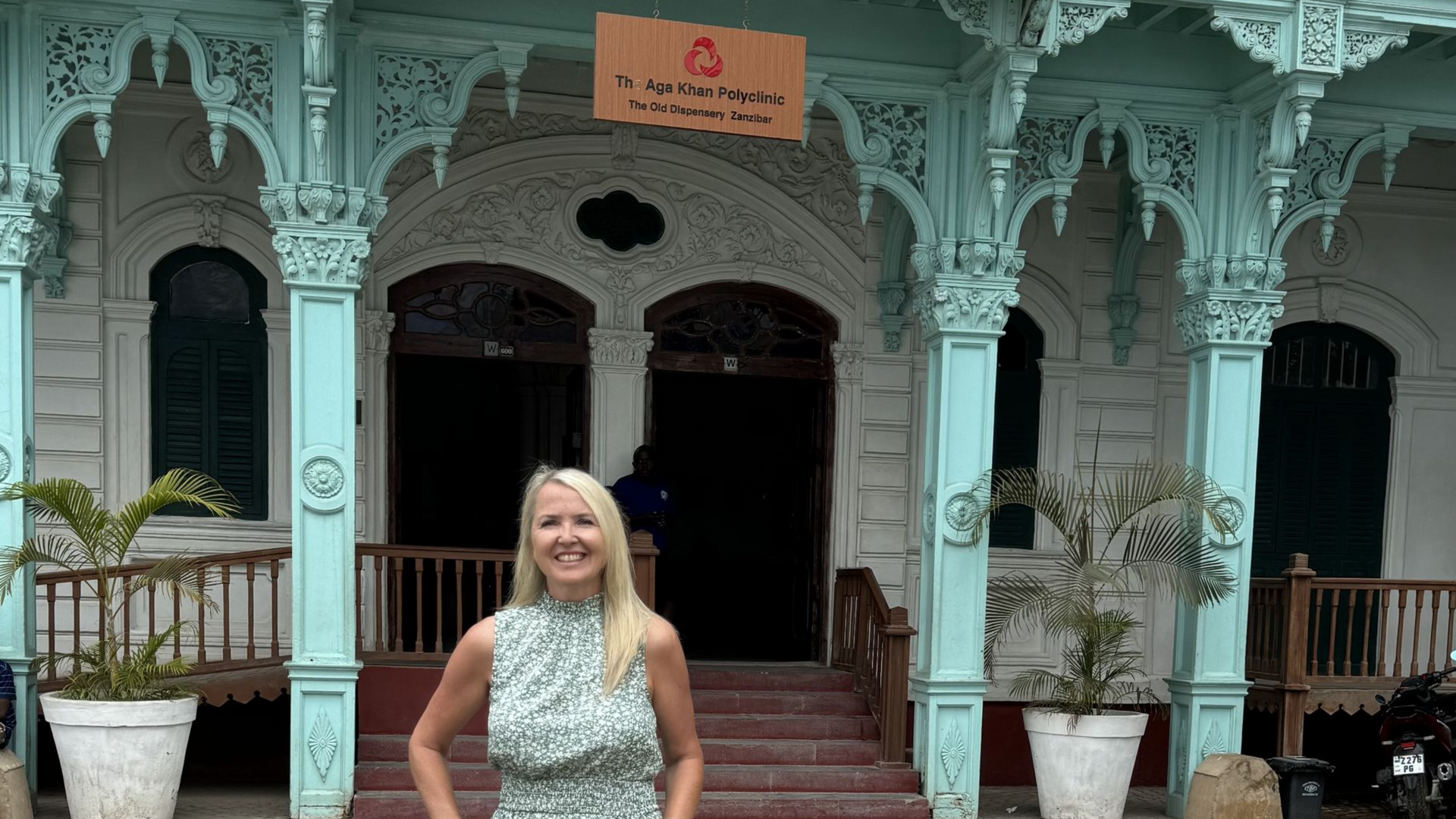
Jambo! Heading home from my latest trip - this time to Zanzibar. I’ve dreamed of visiting for 30 years or more, ever since my dad shared with me a marriage certificate from 1941, which revealed that my grandmother (the Nan I adored) married the Sultan of Zanzibar’s son, and seeing in the certificate’s margin an intriguing ‘police exhibit one’ stamp.  That’s what inspired me to research her complex life story spanning different geographies, and write an historical fiction novel. I recently completed the first draft of 100k words; next step is to edit it and find an agent/publisher. I’ve had 2 - soon to be 3 - business books on AI published by Kogan Page Publishing but this is a whole new experience. This is about giving her a voice; it’s her legacy. Please let me know if you’re aware of any potential interested parties. 🙏 This visit was to the western coast of Unguja, the main island of the Zanzibar Archipelago. I’ve travelled far and wide, but this was my first sighting of the exquisite Indian Ocean. The highlight was a walking tour in Stone Town – the old part of the city. The Sultans commissioned many of the incredible buildings. There’s also a museum dedicated to Freddie Mercury who was born in Zanzibar. And I had a rare opportunity to join a school graduation party. My Guide Kassim was a gem – so well informed and so kind. As a business trip it has not been all plain sailing. I’ll remain professional and spare the details. Suffice to say you never give up learning, and doing business across borders and different legal jurisdictions can pose real challenges. A huge positive learning is the Swahili phrase “pole pole" (pronounced pole-ay pole-ay) meaning “slowly, slowly" or "take it easy" and it reflects a cultural philosophy of patience, an unhurried approach to life, and a mindful appreciation for the present moment. It encourages a calm, relaxed mindset, often encountered in the laid-back lifestyle of East Africa, but also used as practical advice for achieving goals. Wise words for many of us living and working in hectic towns and cities…
By Katie King July 30, 2025
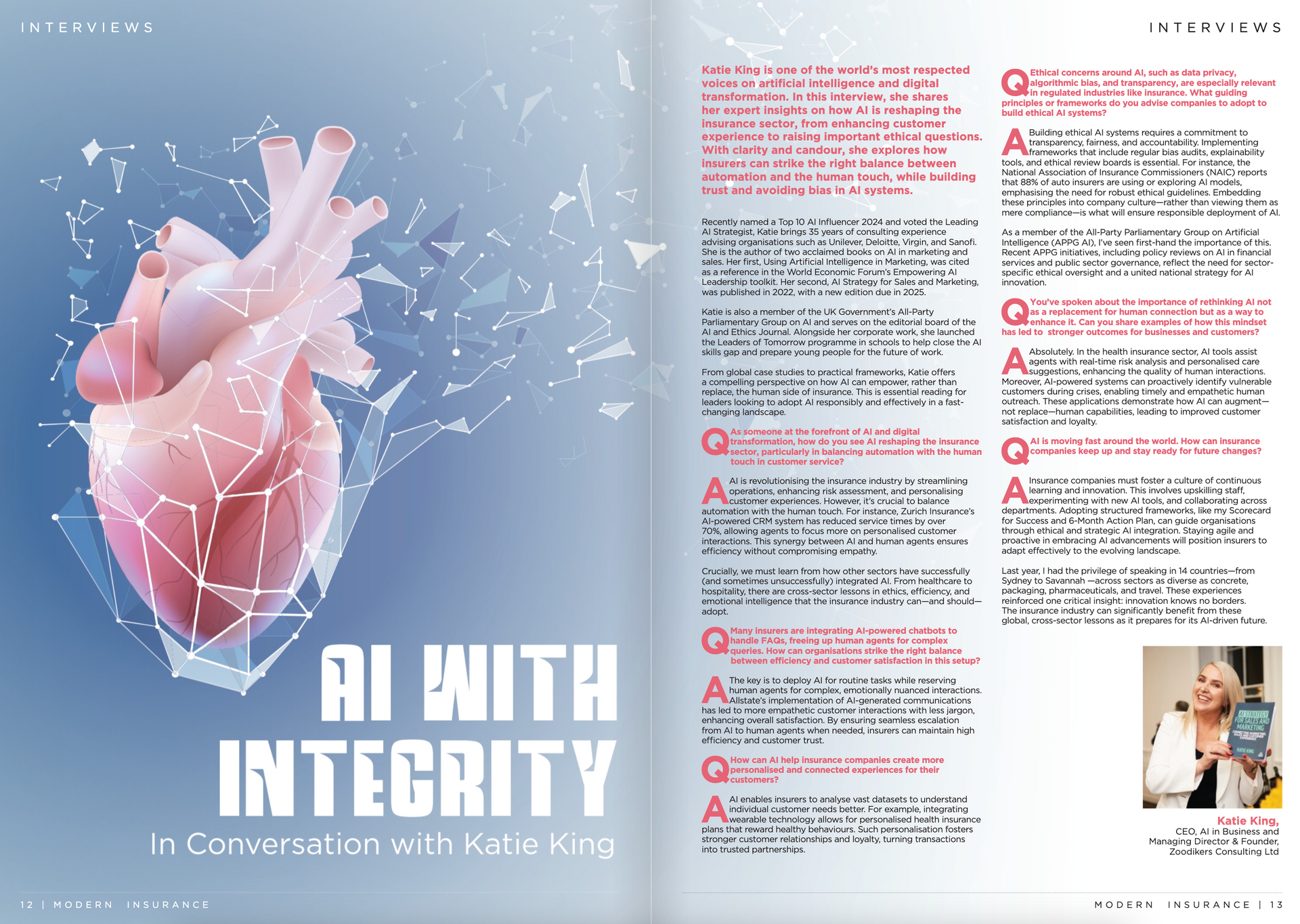
AI is no longer a buzzword – it’s business-critical. I’ve seen that change in the 6 years since my first AI book was released, compared to the landscape today and the case studies I researched for book 3 (due out in November.) AI is impacting every sector, including insurance. I’m featured in the latest issue of Modern Insurance Magazine – which delves into how AI is transforming every aspect of insurance – from underwriting and fraud prevention to customer experience and claims. You can read the full issue here . On page 13, I explore ethical and responsible AI adoption, as does Sagacity Charles Skamser breaks down the emerging AI landscape and what it means for insurers. There are real-world applications from organisations including FibriCheck, I Love Claims, Steeper Group, Geo Sec, SkinVision and A3 Alternative Accommodation Agency Ltd. There are insightful contributions from the Editorial Board and from the following: Carpenters Group, Digilog UK, e2e Total Loss Claims Management, NWVA, FMG, ParaCode, QuestGates, National Windscreens, Lyons Davidson Limited, Auxilis, Thatcham Research, Rapid Repair Network, Witness Wise, CMG, Copart UK Limited, and Laird Assessors. A Fraud Prevention Spotlight offers expert input from Adele Sumner, Allianz, WHITELK Fraud Performance Consulting, FRISS, RGI Solutions, Charles Taylor, and Insurance Fraud Bureau (IFB). I've worked with many Associations, across multiple sectors. This issue features many Association Insights, including BIBA, Motor Accident Solicitors Society (MASS), FOIL - the Forum of Insurance Lawyers, Association of Personal Injury Lawyers (APIL), Chartered Insurance Institute, Managing General Agents’ Association (MGAA), IAEA, CHO on legislative change, ethical innovation, and the broker’s evolving role. The team even asked ChatGPT for its thoughts. What does AI think about its role in the industry? Big thanks to editor Hayley Dalton.
By Katie King July 8, 2025
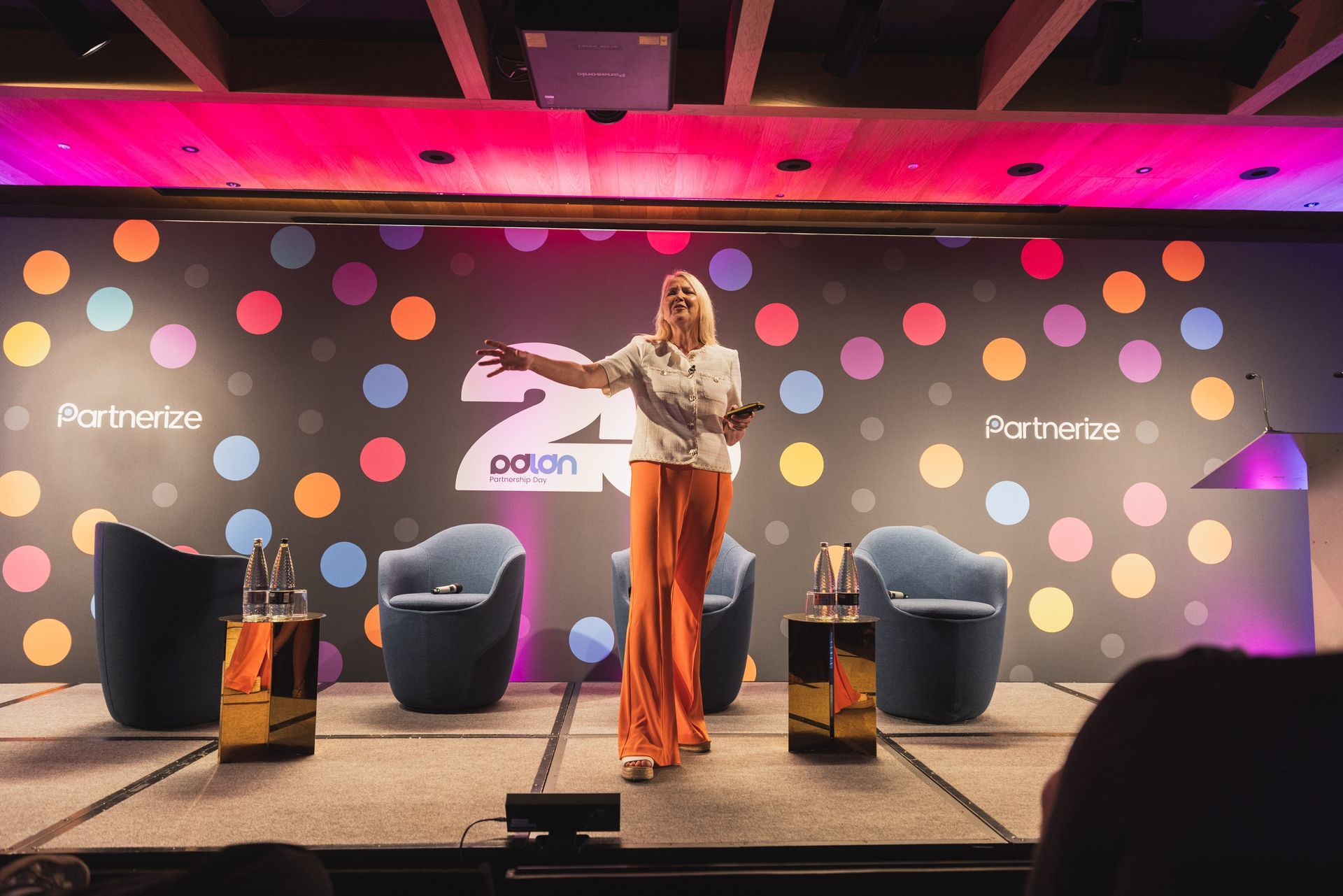
Big thanks to Partnerize for inviting me to deliver the Keynote at their Partnership Day – an event dedicated to AI and innovation in affiliate marketing. My session explored wider company AI strategies, as I shared with the audience ‘stealable innovation’ whereby they can learn from other sectors, as well as a check sheet for measuring the AI potential in a business. Following my talk, Rebecca Betteridge, Hollie Macdonald, Molly Lediard, and Matilda Kousa formed a panel to discuss the future of partnerships for fashion and beauty. AI also featured heavily, as the panel shared the challenges which brands face in gaining buy-in for AI from the business. They talked about the need to educate in order to alleviate concerns; and how important time and patience are. So interesting to hear their advice on the need to shift the narrative of affiliate marketing, focusing instead on innovations with AI such as dynamic commissioning and a personalised approach at the checkout. These incredible ladies represent leading brands and organisations - Selfridges, Puig, Klarna and Fenwick and they were able to advise us all about the need to adapt to changing consumer behaviour, particular during this period of unpredictable socio economics and global uncertainty. They debated the need to research how and when customers shop; also the importance of price sensitivity, given how customers conduct online research and then visit physical stores. We learned how peer reviews have gained importance in how consumers trust brands. Thanks for these learnings. Thanks to Kate Ellis Maura Smith and all the team and congrats on staging such a great event!
By Katie King June 13, 2025
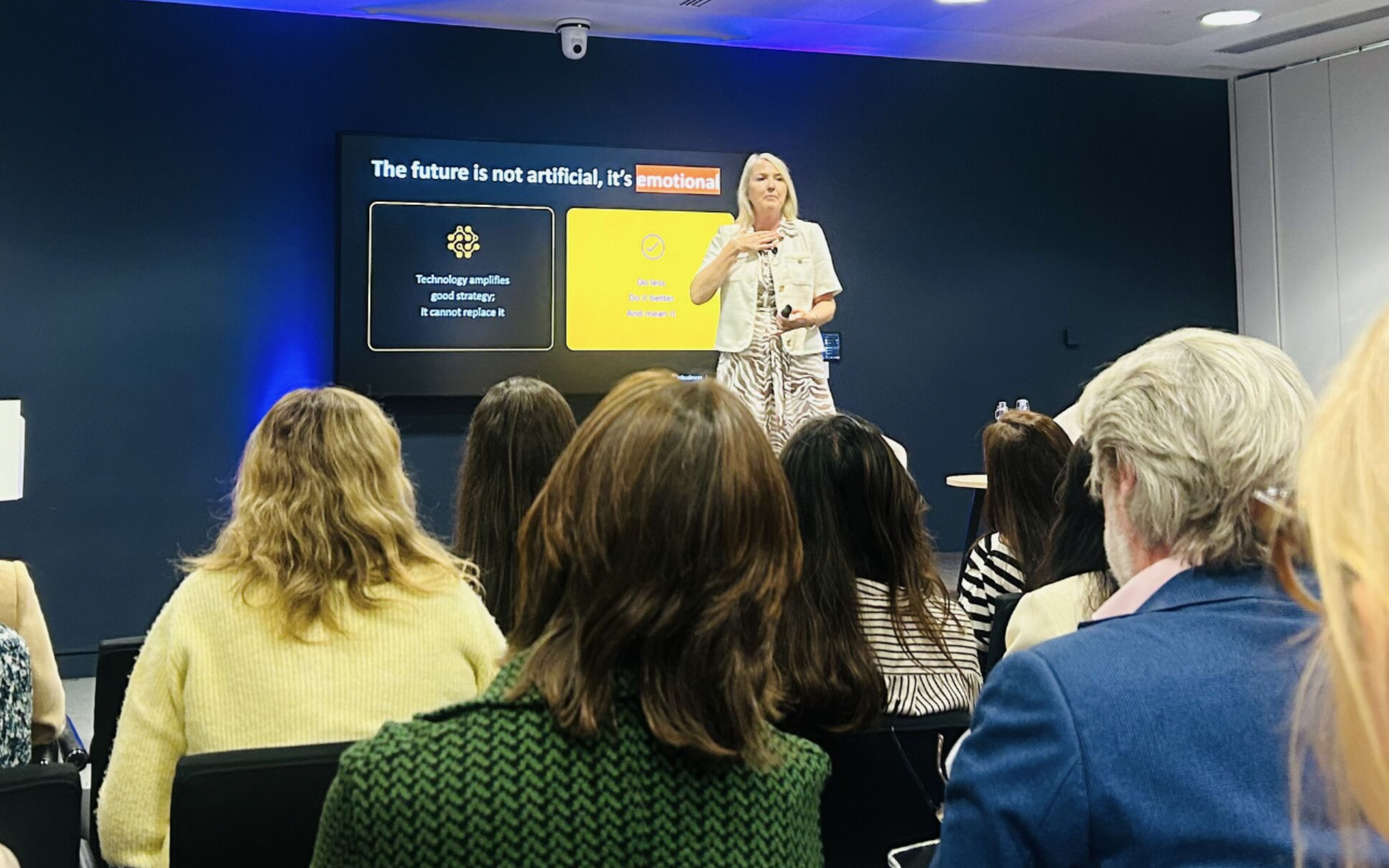
What a great week of tech in sunny London! Thanks to RPC for inviting me to speak at their stunning offices in St. Katharine Docks for London Tech Week! Following opening remarks from RPC's Caroline Tuck, I gave the first Keynote on the fact that AI is no longer a distant concept – it's here and fundamentally reshaping the way businesses operate, unlocking opportunities that were once unimaginable. I walked everyone through the ways businesses can harness AI in an ethical way, how to equip your workforce in the AI era and what to consider when rolling out AI initiatives on a global scale. I was followed by Piers Wingfield – a fascinating session on how, in a single workplace, there could be up to 5 generations, each bringing different experiences, ideas and norms. While all are valuable in their own right, intergenerational conflict often stems from differing experiences. He covered how tech, including AI, is being used effectively to relieve tensions, maximise opportunities and improve workplace collaboration and culture. There was then a discussion and networking event for women in the tech industry, covering how tech usage has changed over the last 10–15 years, what the future looks like in terms of tech use in the media and entertainment and retail and consumer industries, whilst also discussing the challenges and opportunities for women in the tech industry, hearing from two incredible leaders. Big thanks to Dawn Airey CBE, Chair at Women’s Super League Football and Maria Raga Venture Partner and Angel Investor.
By Katie King May 30, 2025
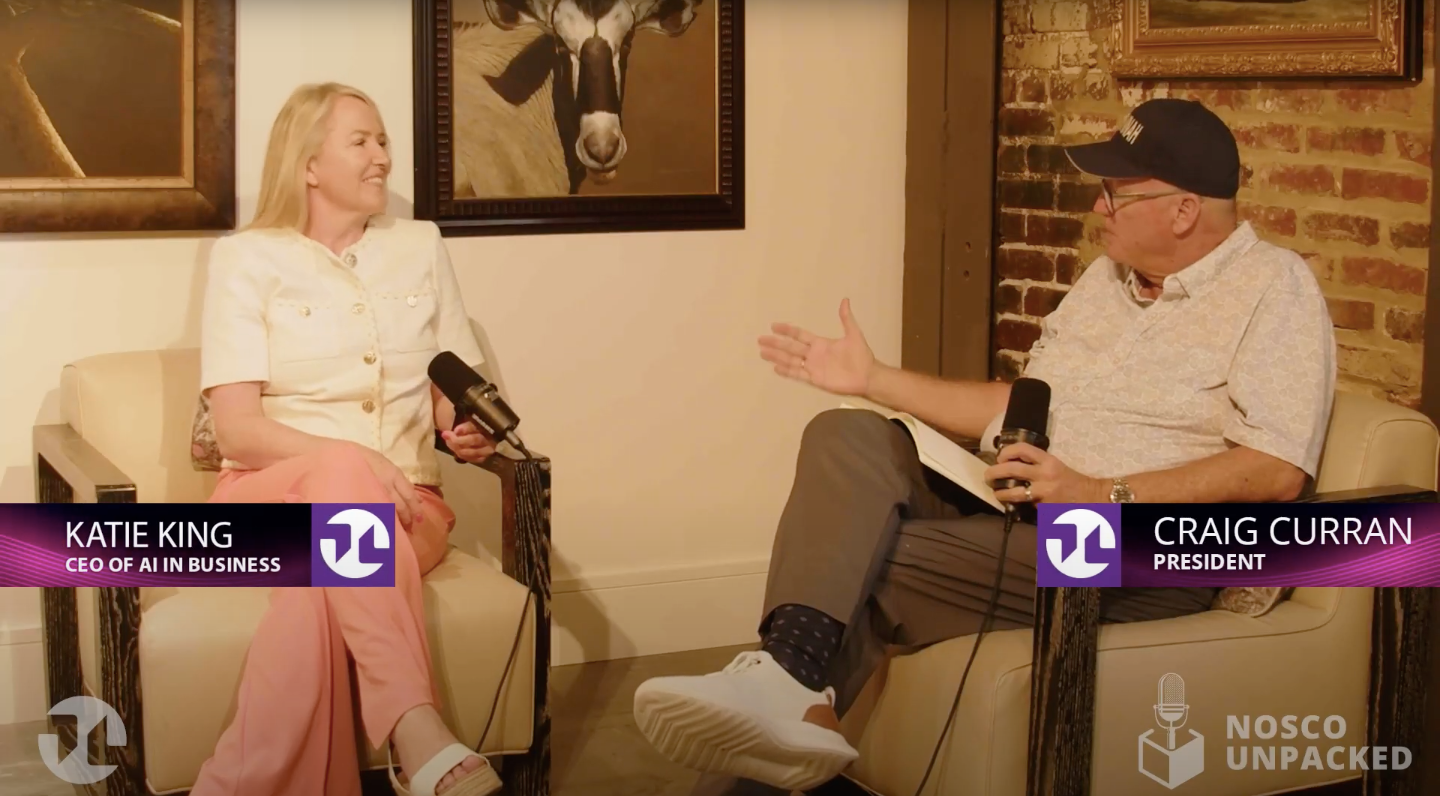
I've just returned from speaking in Savannah, Georgia (USA) at Nosco 's MasterMinds event. After my Keynote, I joined CEO Craig Curran to record an episode for his podcast Nosco Unpacked . We explored how AI is transforming the printed packaging industry. From reducing labelling errors to enabling hyper-personalised customer experiences, I shared real-world examples of how brands are using AI to drive smarter packaging solutions. Key takeaways from the discussion include: • AI is cutting labelling errors by up to 70%. • Smart packaging is boosting engagement through personalisation. • AI is helping teams balance creativity, compliance and speed to market. • AI is not replacing people, it's amplifying their impact. Whether you're in pharma or consumer goods, this episode is packed with insights to help you lead through innovation. Check it out below: 
By Katie King May 7, 2025
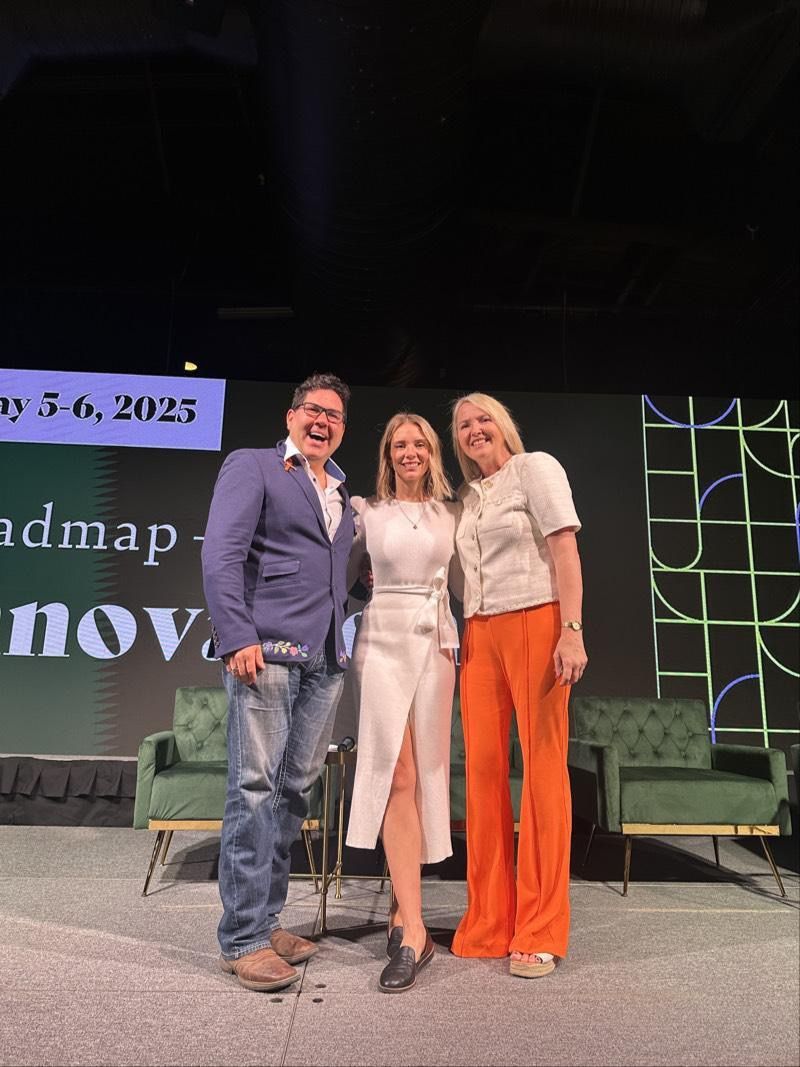
Heading home from Saskatoon, Canada after a wonderful few days at the very impressive inaugural Prairie Business Summit, hosted by Edwards School of Business, University of Saskatchewan . I gave a Keynote on AI, focused on how to kickstart AI adoption for competitive advantage. I also talked about using ChatGPT to help find a literary agent for my debut novel. And my school AI programme. I have literally just finished my 3rd book for publisher Kogan Page Publishing on how to apply AI to business but like everyone else, I must learn continuously. I listened to some fabulous Keynotes, panel debates and practical workshops, hearing about step prompting, synthetic customers, the accountability of algorithms, model compression, the need for consistent use of AI, AI skill wallets and containers; how software as we know it today is over and that the future of computing involves no apps, and there will be nothing between you and your data. That nuclear fusion will offer unparalleled energy for free. The words ‘secret sauce’ were used many times. I have pages of notes but this is a quick flavour. Highlights included: A really informative, humorous session from Adam Cheyer - Siri co-founder(!) – who shared powerful insights on The Future of AI in Business and how AI, in partnership with people, significantly increases productivity. Quote: “Generative AI will be as important as the Web and Mobile. Challenges exist but ROI is starting to happen, and use cases are expanding for internal and external products. In the future, AI will offer better interfaces, both knowing and doing, and a worldwide ecosystem of partner service.” A great workshop from Scott Meyer , CEO and Co-Founder of Chipp AI – someone who shares my passion for AI in marketing and customer engagement. He outlined some great tools and frameworks involving iterative collaboration between humans and AI. Quote: “1 person with AI = 1.5-2 people without AI.” The best part of travelling around the world delivering these sessions is the opportunity to meet wonderful people and learn about local cultures. Awesome to chat to fellow speaker Ross Pambrun who shared a vision for driving growth and empowering communities in the Prairies. Coming from the UK where age is definitely not revered(!), it’s wonderful to see the respect Canada has for its elders. (I experienced the same in Australia and New Zealand.) We were lucky to hear from Elder Julie Pitzel, who blessed the food, shared prayers and inspired us with her wisdom, reminding us to keep searching for the answers, and how our spirits shine as bright as the stars. Also great to see the indigenous hoop dance by Lawrence A. Roy Jr. So…a very big thanks to the amazing Kristan Embrett Marjorie Delbaere Joelena Leader and all the team for staging such a great event., and for super moderation by the hugely energetic Heather Morrison .
By Katie King August 3, 2024
The body content of your post goes here. To edit this text, click on it and delete this default text and start typing your own or paste your own from a different source.
By Katie King July 4, 2024
I am excited to announce that I have joined forces with Champions Speaker Agency, a premier agency specializing in providing top-tier Keynote speakers on AI and the future of technology. This collaboration represents a significant step in my journey as a global AI expert and speaker, allowing me to further my mission of educating and inspiring diverse audiences about the profound impact of artificial intelligence on our world. Champions Speaker Agency has a stellar reputation for connecting clients with thought leaders who are at the forefront of their respective fields. Working in 66 countries, their commitment to excellence and innovation aligns perfectly with my own values and goals. I’m confident that together we can drive meaningful conversations and spark innovative ideas that will help shape the future of technology. As a passionate advocate for AI, I know how crucial it is to demystify this transformative technology and make it accessible to everyone. Through my speaking engagements, I aim to break down complex AI concepts into understandable insights, empowering individuals and organizations to harness the potential of AI for positive change. Joining Champions Speaker Agency amplifies my ability to reach a wider global audience and make a more significant impact. In this new chapter, I look forward to collaborating with Champions' extensive network of clients, ranging from corporate leaders to educational institutions and beyond. Together, we will explore the exciting possibilities that AI and future technologies present, fostering a deeper understanding and appreciation of these advancements. Jack Hayes , Director of Champions says: "We are thrilled to welcome Katie King to the Champions Speaker Agency. As a world-leading AI expert, her insights and expertise will be invaluable to our clients. Katie's passion for technology and her ability to inspire make her a perfect fit for our roster of distinguished speakers." Champions’ head of AI and technology speakers, Mark Matthews says: “Our sister company has previously worked closely with Katie and always received amazing feedback, ranking Katie as one of the UK’s leading AI speakers and also voted in the top 15 digital disruption expert speakers . I am eager to embark on this journey with Champions Speaker Agency and to contribute to their esteemed roster of speakers." This partnership is an exciting opportunity to continue my work as a leading voice in AI and technology, inspiring and educating audiences around the globe. Having recently been selected as a top 15 women in tech speaker by Champions, I have no doubt that this new partnership will lead to many more great things and look forward to strengthening the relationship going forward. About Champions Speakers Agency Champions Speakers Agency is a leading provider of keynote speakers and experts for events worldwide. With a diverse roster of renowned professionals, the agency is committed to delivering inspirational and impactful speakers to meet the needs of their clients.